
Climate Consortium of the Commons
The over-exploitation of finite resources is caused by the Tragedy of the Commons, which results from free access, over consumption, of earth resources and high demand. However, Professor Elinor Ostrom's research on common-pool groups demonstrated that this tragedy can be avoided without top-down regulation, provided that certain conditions are met. Like the false equivalence of Developed Markets vs Emerging Markets. Consider the lack of climate accountability vs a commitment to adaptation.
The Climate Consortium of the Commons seeks to disrupt the "business as usual" thinking, address accelerating earth tipping points caused by anthropogenic growth, and leverage multidisciplinary excellence.
We Can. We Will.
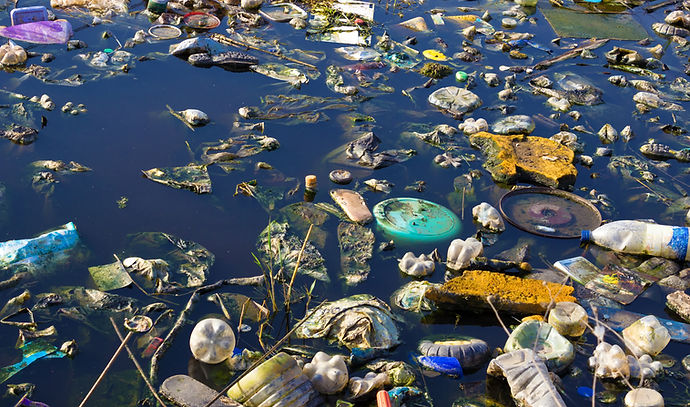
Disruption
Recognizing that no single entity holds all solutions,
The Climate Consortium of the Commons embraces a collaborative approach to tackle Earth's Tipping Points.
We believe in the power of collective commitment, cultural competence, and science-based knowledge to address urgent anthropogenic causes of climate change.
Welcome
to Climate Consortium of the Commons
Consortium
Climate Change is hard. It's messy. It's urgent.
We are on a mission to disrupt the accepted model, systemic perspectives, the stereotype of who is qualified to lead. Accelerating earth tipping points underscores the urgency for our multidisciplinary credentials, science-based training, strengthened by cultural competence.
Consortium
"...a powerful collaboration that can exponentially increase impact, pooling broad resources, shared vision and expertise. Achieving goals that would be impossible for any single leader -- advancing scientific research, advocating for social change, driving economic impact."
Consortium
The challenges to meaningful climate change include profit-driven growth, climate deniers, misinformation, and barriers to accountability.
-
3 out of 4 people live in water-insecure countries | 5.6 billion people worldwide are water insecure
-
Rural areas contain 80% of the world's population without electricity
-
Forests play a key role in the mitigation of climate change, removing an estimated 16 billion tons of carbon dioxide (CO2) from the atmosphere annually equaling about half of the annual CO2 released from burning fossil fuels.
-
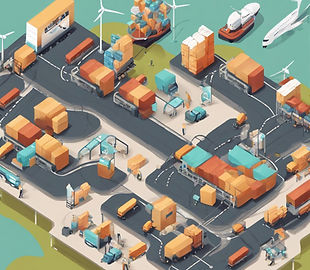
Transportation (by road, air, sea) is also a major source of greenhouse gas emissions, yet many in low-income countries, especially rural areas, do not have access to roads or reliable transportation
The Climate Consortium of the Commons is a WORKING group of
practitioners with advanced degrees.
Our 3 pillars:
1. Public Policy
2. Science-Based Solutions
3. Environmental Economics
Transformative
Imagine hundreds of Black, Brown & Indigenous Women with advanced degrees in every area of Climate - from across the globe.
Multidisciplinary, peer-reviewed, scientists, researchers, lawyers, policy analysts, engineers, public health, finance.
A working group - skilled, committed, culturally competent.
The Climate Consortium of the Commons
Mission
“Provide meaningful impact on climate change -- by increasing global representation of Black, Brown and Indigenous women with advanced degrees to deliver science-based collaboration, quantitative metrics, and increasing all forms of environmental economic development and finance.”

What We Do

Public Policy
Municipal | Governance | Trades & Industry
Leveraging the impact of public policy at the intersection of innovation, legislation, and equity.
-
Public policy advocacy/regulatory advisory
-
ESG & sustainability materiality
-
Addressing communications efficacy
-
International policy and comparative analysis
-
Sustainable supply chain advisory
-
Journal reviewing/Co-authorship

Environmental Economics
Finance | Philanthropy | Investment
Environmental economics is the efficient use of natural resources. Funding and finance support differences between developed and emerging markets, the costs of mitigation versus adaptation, long-term systems change.
-
Capital Investment
-
Economic Development
-
Small business innovation and jobs
-
Cost-benefit analysis
-
Social cost of carbon analytics
-
Optimize outcome-based philanthropy
-

Science-Based Solutions
Align with United Nations SDGs | Inform Policy
Aid in adaptation and mitigation | Metrics & Data
Increase accountability | Facts & Climate Updates
Technical Assistance
-
Community change & capacity building
-
Plan, design, and build projects
-
Strengthen implementation capacity
Training | Consulting | Problem Solving
Research | Analysis
Nature-based Solutions
Partnerships
Let's Talk Transformation Strategy
-
Champion accurate information
-
Reach targeted audiences
-
Internal skills building
-
External - multiply your impact
-
Sponsorship

